Minimalist Travel Packing Planner: A Light, Calm System
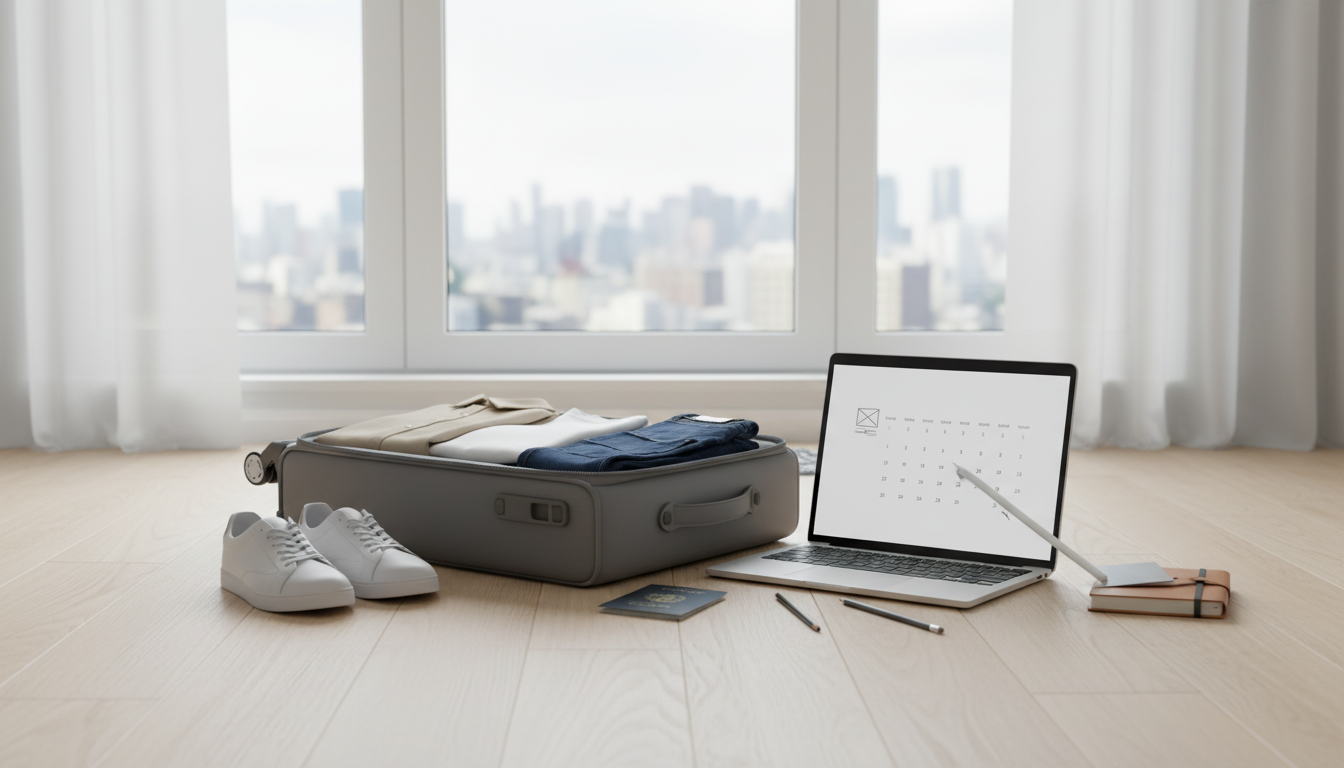
Minimalist Travel Packing Planner: Pack Light, Stay Organized, Travel Calm
Packing gets easier when every item has a purpose. A minimalist approach reduces weight, decision fatigue, and last-minute stress—without sacrificing comfort. With a simple framework and a reusable digital planner, it becomes easy to pack consistently for any destination, season, or trip length.
What minimalist packing actually means
Minimalist packing isn’t about going without—it’s about packing with intent. The goal is a bag that’s easy to carry, a list that’s easy to repeat, and a trip that feels lighter from day one.
- Pack for real activities, not “just in case” scenarios.
- Choose multipurpose items that work across outfits and quick weather shifts.
- Limit duplicates: one core set, plus one backup only when hygiene or climate truly requires it.
- Aim for easy carry: lighter bag, fewer liquids, and less laundry complexity.
- Use a consistent checklist so nothing important gets missed.
A simple packing framework: Essentials, Layers, and “Nice-to-haves”
When packing feels overwhelming, structure removes the guesswork. Use this three-part system and you’ll always know what to pack first—and what to cut.
1) Essentials (pack first)
Essentials are items that keep you moving even if everything else goes wrong: documents, payment, phone, chargers, and required medications. Keep them together so they’re quick to grab and easy to check.
2) Layers (pack to the forecast)
Think in layers rather than outfits: a base layer, a mid-layer, and an outer layer sized to the forecast. This approach handles temperature swings without packing bulky duplicates.
3) Nice-to-haves (only if you have room)
Nice-to-haves come last. Add them only after essentials fit and you’ve met your weight/space target. A simple rule: decide your container (one personal item or one carry-on) and pack to the container—not to your anxiety.
Do a 10-minute review the day before travel: remove extras, confirm chargers/meds, and keep your “airport pocket” items accessible. For carry-on toiletries, follow the TSA 3-1-1 liquids rule to avoid delays: TSA: 3-1-1 Liquids Rule.
Minimalist packing list (customize by trip length and climate)
Use this as a baseline for most trips, then adjust for your actual activities and weather.
- Documents & money: ID/passport, tickets/confirmations, insurance info, one payment backup.
- Tech: phone + charging cable, wall plug, earbuds; add laptop/tablet only if needed.
- Clothing core (typical 3–5 days): 3 tops, 2 bottoms, 1 mid-layer, 1 outer layer, 5 underwear, 4 socks, 1 sleep set.
- Shoes: 1 primary pair; add 1 compact secondary pair only if a specific activity demands it.
- Toiletries: travel-size basics, meds, sunscreen; keep liquids compliant for carry-on.
- Health & comfort: mini first-aid, hand sanitizer, reusable bottle (empty for flights).
- Organization: one pouch for documents/tech, one for toiletries, one for laundry.
Lean packing list by trip type
| Trip type | Clothing focus | Shoes | Key extras to consider |
|---|---|---|---|
| City weekend | Smart-casual layers; wrinkle-resistant pieces | 1 pair (plus optional flats) | Compact umbrella, small crossbody, dressier top |
| Beach break | Breathable basics; quick-dry items | Sandals + 1 walking pair | Swimwear, sun hat, reef-safe sunscreen |
| Cold-weather | Thermal base + warm mid + shell; repeatable colors | Waterproof boots | Gloves, beanie, packable down jacket |
| Work trip | Mix-and-match neutrals; one meeting-ready outfit | Polished walking shoes | Laptop kit, presentation adapter, stain remover pen |
How to pack light without feeling underprepared
Feeling “underpacked” is usually a planning issue, not a quantity issue. The fixes below keep you covered while staying carry-on friendly.
- Build a capsule wardrobe: pick 2–3 colors so everything matches everything.
- Choose re-wearable fabrics: merino and quick-dry blends reduce odor and dry fast; plan one simple laundry moment.
- Use “one in, one out”: if you add an accessory or gadget, remove another.
- Minimize bulk: wear your heaviest layer and shoes in transit.
- Downsize toiletries: decant into smaller containers or choose solid alternatives; replace full-size items at your destination when practical.
For health-related packing reminders (especially meds and basics), it helps to cross-check a credible list like CDC: Travel Health—Pack Smart.
A stress-free packing workflow with a digital planner
A reusable planner turns packing into a repeatable routine instead of a fresh scramble every time.
- Create a master list once, then duplicate it per trip to save time.
- Add context: destination, weather, activities, and baggage limits.
- Use checkboxes for staged packing: “buy,” “laundry,” “pack,” and “carry-on security.”
- Keep a “grab-and-go” section for commonly forgotten items (chargers, adapters, meds).
- Write a quick post-trip note: what went unused, what was missing, and what to upgrade before the next trip.
Product picks for a calmer, lighter trip
Minimalist Travel Packing Planner (digital download)
If packing decisions are the stressful part, a structured checklist makes it automatic. The Minimalist Travel Packing Planner | Digital Packing Guide for Light, Smart & Stress-Free Trips is designed to help keep packing aligned with baggage limits, trip length, and real activities. Price: $9.99 (in stock).
Budget support for travel planning
Staying minimalist is easier when you know what you’ll buy (and what you won’t) on the road. For travelers who like structure, Budgeting Like a Pro: Complete eBook – Personal Finance Planner, Zero-Based Budgeting, 50/30/20, Pay-Yourself-First, Debt Payoff & Savings Plan can help map spending ahead of time so you’re less tempted to “pack your worries.”
Common minimalist packing mistakes (and quick fixes)
FAQ
What is a good minimalist packing list?
A solid baseline includes documents/payment, phone + charger, toiletries/meds, one primary pair of shoes, and a small clothing capsule (about 3 tops, 2 bottoms, 1 mid-layer, 1 outer layer, plus underwear/socks). Adjust by climate (add thermals or sun protection) and by activities (only add specialty gear if it’s truly scheduled).










Leave a comment